Botanocal Name: Ginkgo biloba
In New York City it is the most widely planted tree. It thrives in difficult urban conditions including drought, fog, frost, low sunlight levels and pollution. Its resistance to parasites, insects and pollution ensure it of an astonishing lifespan of a thousand years.
ASIAN HISTORY
The Chinese, with the reverence for the elderly, found that ginkgo could reverse memory loss in the elderly including its use daily in the way of teas and dishes made from the ripe ginkgo fruit.
Ancient Japanese scholars protected their valuable papers from insects by placing the leaves between the pages. The coatings of the seeds have long been used as an insecticide. Modern science has proved that it contains a disinfectant called 2-hexenal which kills microbes, including the E.coli virus.
RECENT JAPANESE HISTORY.
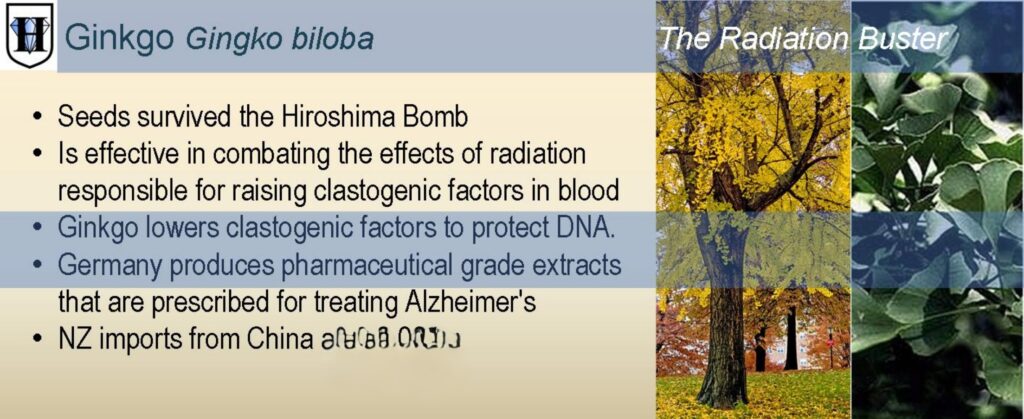
Most touching of all, ginkgo seeds in the ground survived the Hiroshima blast to sprout from the ashes . The living ginkgo survives and marks the site of the explosion.
CHERNOBYL DISASTER
Ginkgo biloba’s ability to scavenge free radicals gives us a means to counteract radiation we are exposed to be it as part of cancer treatment or from pollutants.
Proof of this comes from the aftermath of the Chernobyl disaster when radiation spread across North Europe as far as Great Britain.
GINKGO TREES FOR CITY LANDSCAPING
.
RESEARCH:
Natural Crude Extracts
Shown to be effective in combating the effects of radiation. Exposure to radiation causes cells to break down and ginkgo has been shown to be the most effective antidote to the breakdown of cells due to radiation. In the blood of people exposed to radiation we find substances known as clastogenic factors. These factors can break chromosomes and severely damage cells. Survivors of the Hiroshima and Nagasaki bombs and those workers that worked to clean up the Chernobyl nuclear plant all had clastogenic factors in their blood.
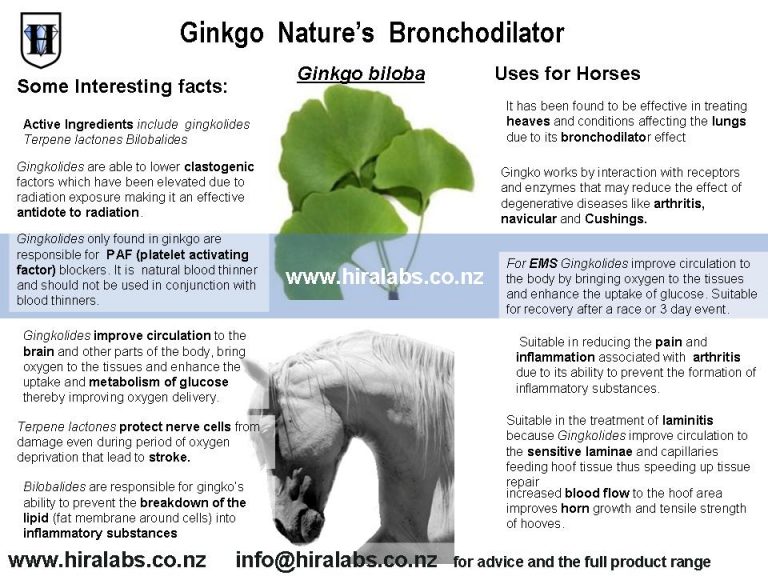
Among the plant’s main constituents are ginkgolides which are not known in any other plant species these are PAF (platelet activating factor) blockers. In other words it is as natural blood thinner and should not be used in conjunction with blood thinners like Warfarin, aspirin etc.
Ginkgolides improve circulation to the brain and other parts of the body, bring oxygen to the tissues and enhance the uptake of glucose thereby helping metabolize glucose.
Terpene lactones protect nerve cells from damage even during period of oxygen deprivation that lead to stroke.
Bilobalides account for ginkgo’s ability to improve memory and promote recovery from stroke.
Ginkgo works by interaction with receptors and enzymes that may reduce the effect of degenerative diseases and aging.
A recent study has found it to be a natural bronchodilator and effective in treating asthma in children.
Ginkgo extract improved the mental performance in geriatric patients where this was impaired.
One of the main features is ginkgo’s ability to prevent the breakdown of the lipid (fat membrane around cells) into inflammatory substances.
MEDICINAL USES:
For Horses:
Due to its ability to improve the blood and oxygen supply to all cells and tissues ginkgo is unsurpassed in the treatment of any hoof related issues